

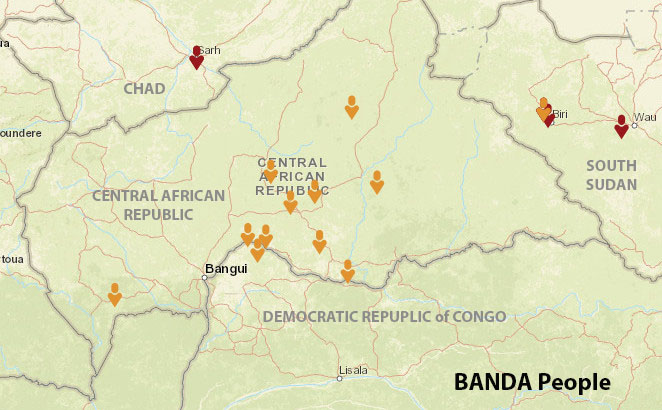
The Banda people are the largest single ethnic group in the Central African Republic.
They are also found in the Democratic Republic of the Congo, Cameroon, South Sudan and Chad.
They numbered about 1,300,000 at the beginning of the 21st century.
The Banda speak a language of the Adamawa-Ubangi subgroup of the Niger-Congo language family that is related to that of their Gbaya and Ngbandi neighbours.
The Banda observe patrilineal descent and live in hamlets of dispersed homesteads under the local governance of a headman. Rural Banda raise corn (maize), cassava, peanuts (groundnuts), sweet potatoes, yams, and tobacco. Men hunt and fish, and women gather wild foods and cultivate crops. Banda craftsmen produce carved wooden ritual and utilitarian objects; they are best known for their large slit drums carved in the shapes of animals.
Stateless when first encountered by Europeans, the Banda selected war chiefs only during times of crisis, after which the warriors were divested of their power. Age grades and initiations called semali assured intergroup unity in time of war. Marriage traditionally required bridewealth, often in iron implements. Polygyny, although still practiced, has declined with the rise of a money-based economy.

The Banda are the largest single ethnic group in the Central African Republic, traditionally found in the northeastern part of the country.
They numbered about 1,300,000 at the beginning of the 21st century.
In Central African Republic they are concentrated in the prefectures of Basse-Kotto, Haute-Kotto, Kemo, and Ouaka in the central and eastern parts of the country.
The exact number of the Banda and its sub-tribes is difficult to determine. Their main towns are Raga, Mangaya, Sopo and Deim Zubier.
The Banda is made up of sub-tribes (clans). They are distinguishable from each other by their distinct and different languages and dialects.
The Banda is made up of sub-tribes (clans) including:
|
|
|
Rural Banda raise corn (maize), cassava, peanuts (groundnuts), sweet potatoes, yams, and tobacco. Men hunt and fish, and women gather wild foods and cultivate crops.
Banda subsistence activities include hunting, gathering, fishing, and the Cultivation of crops such as melons, millet, okra, and yams. Success in these activities was believed to depend, in part, on proper sacrifices to ancestral and other spirits or on the acquisition of special powers.
The French colonial authorities promoted the cultivation of cotton as a cash crop and cassava as a subsistence crop in many Banda regions, and Christian missionaries won many converts among the Banda during this era. Still, most Banda in rural regions continue to rely on subsistence acclivities.
In contemporary times, the Banda people are settled farmers in the Savannas. Cotton and cassava farming was promoted among the Banda people by the French colonial officials, while Christian missionaries won many converts during the French rule.
The Banda occupy the crest of the Nile-Congo watershed. The terrain is rugged plains with isolated hills cut by deep valleys in which drain several perennial streams. The climate is tropical and the vegetation is thick forests with tall grasses. The rainfall regime is one long season that sustains extensive agricultural activities of these people. The tribe is agrarian and their economy is essentially subsistence with little trade and barter with neighbouring tribes. The natural resources are mainly forest products - timber, honey, and wild life. It is yet to be established whether gold and copper mineralization (in hofra en nahas and Kafiakingi) reaches this area.
In pre-colonial times, the Banda were divided into clans, with no hereditary rulers or other officials. Clans were dispersed in small hamlets that usually consisted of a few clansmen and their families.
The Banda are said to have migrated into the Bahr el Ghazal from Central African Republic in successive waves which may have divided them into three categories:
a) Those who fled from French Equatoria Africa under the pressure of Sanusi in the 18th century;.
b) Those who came after the defeat of Sanusi;
c) The ‘Faranza’ who left later owing to dissatisfaction or friction with the new colonial government.
During the nineteenth century, slave raiders from present-day Chad, Sudan, and the south-eastern (Central African Republic began to penetrate Banda territory, killing or carrying away many of its inhabitants. The arrival of European colonists at the turn of the twentieth century initially provided slave-raiding states with more weapons and thus contributed to the depopulation of much of the eastern part of the country. However, the French suppressed slave raiding after establishing the colony of Ubangi-Shari (later renamed the Central African Republic) in 1903.
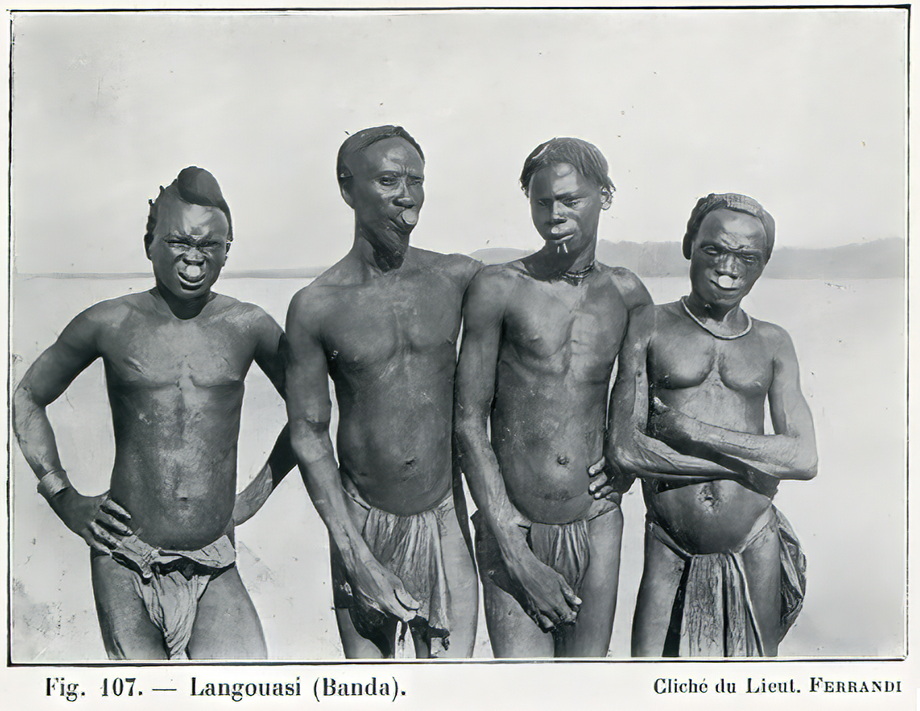
They are divided by subgroups determined by dialect. They have at least 11 subgroups in the CAR, although that number might not be precise. One of these subgroups is the Banda-Langba.
Traditionally they didn t have a chief until one was needed for military purposes, much like Israel before the advent of kings. They were adversely affected by the slave trade as early as the 1100s when Muslim traders took them by force. Killings and enslavements during that era left them depopulated or moved to other parts of Africa. The 1800s saw European colonialists who also enslaved them and used them as cheap labor.
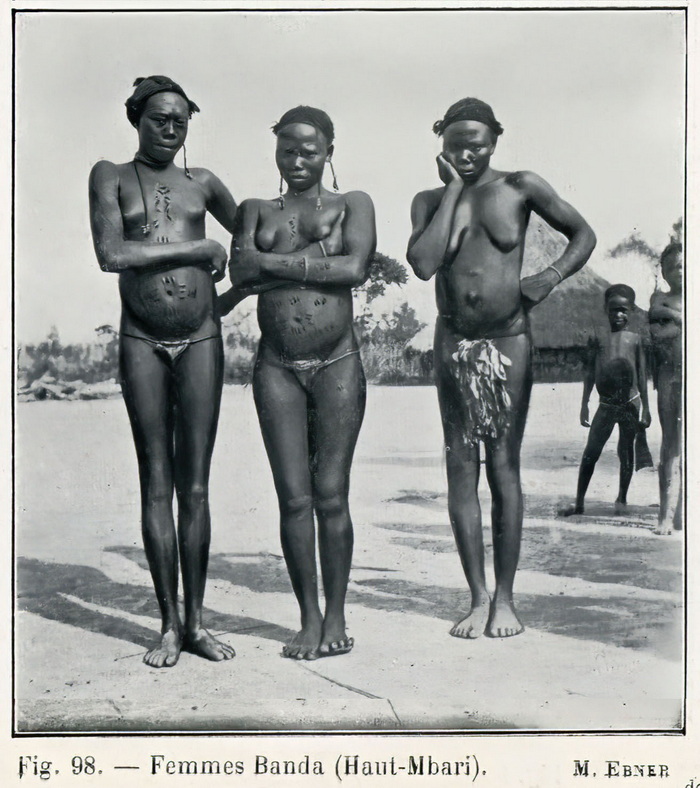
The Banda speak a language of the Adamawa-Ubangi subgroup of the Niger-Congo language family, known as Banda or Ubangian languages, that is related to that of their Gbaya and Ngbandi neighbours.
The Banda languages have variations; nine distinct geographically distributed vernaculars are known.The different Banda sub-tribes speak different languages and dialects.
The Banda are a patrilineal ethnic group, who traditionally have lived in the Savannas north of the Congo, in dispersed home groups guided by a headman. They sustain themselves by hunting, fishing, gathering wild foods and growing crops. During times of crisis, to resist slave raids and to respond to wars, the Banda selected war chiefs. After the crisis was over, they relieved their warriors of their powers.
There is very little in print about the social organisation of the Banda apart from mentions that it is made up of several sub-tribes and clans. The most persistent information is that of cannibalism practiced by some of the sub-tribes.
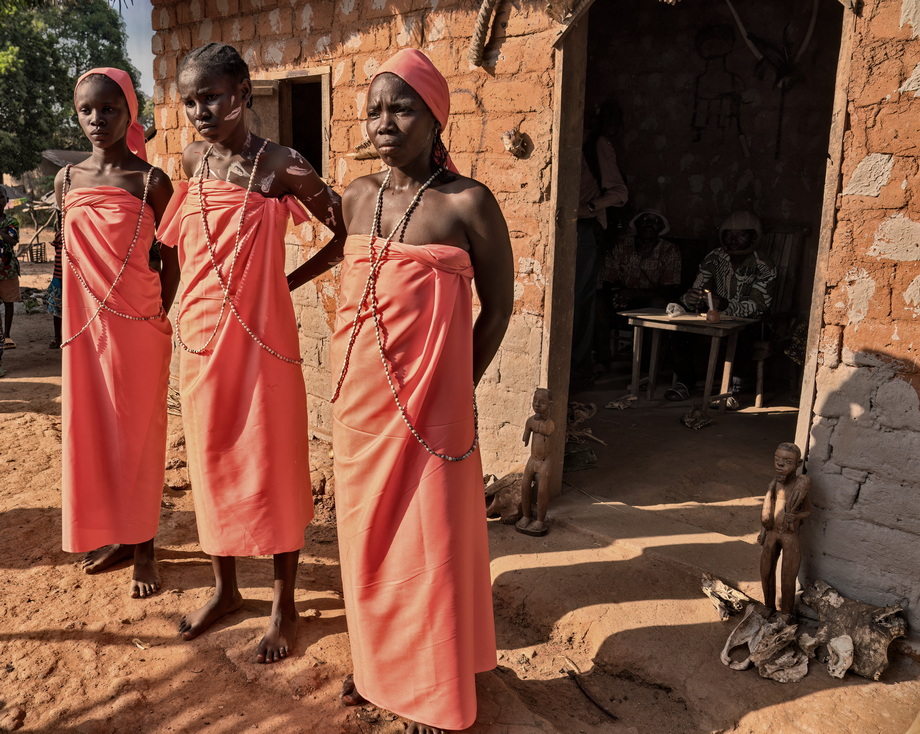
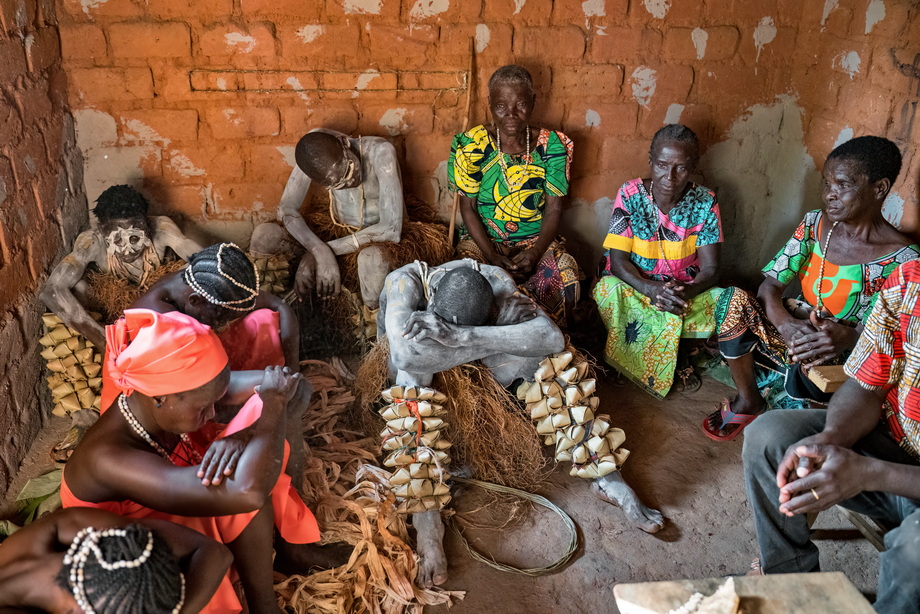
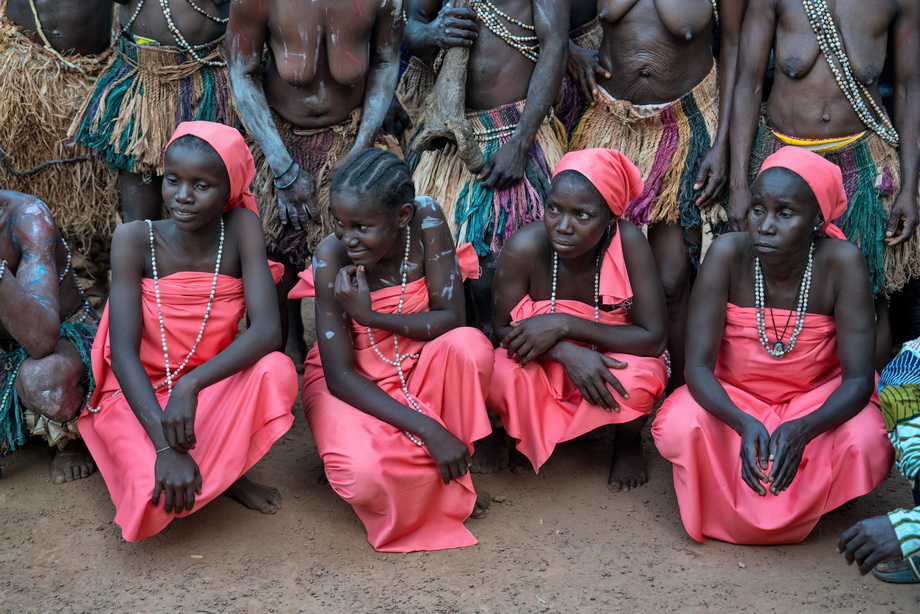
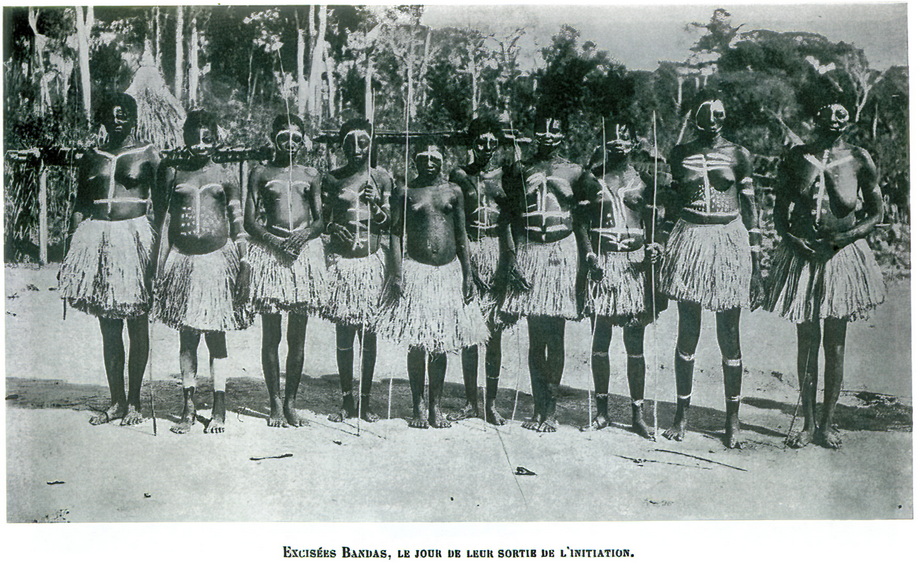
Rites of passage, especially the transition to womanhood for females, were important events in the lives of the Banda.
The Banda people have their rites of passage, such as Semali which recognizes the crossing into adulthood. At weddings, dowries in the form of bridewealth have traditionally included iron implements for the family.
Polygyny was practiced historically among the Banda people, but this practice has declined in modern times.
Banda craftsmen produce carved wooden ritual and utilitarian objects; they are best known for their large slit drums carved in the shapes of animals. The ethnic group is locally famous for craftsmanship, specifically carved wooden objects used for rituals and general utility, as well as their large animal-shaped slit drums. These drums, now attributed by various names such as Banda-Yangere, were used by the Banda people for musical celebrations and as tools for transmitting messages. The Banda-Linda group is known for their music using wooden pipes, also called Banda-Linda Horns.
Elements of their pre-colonial worldview persist in syncretic combination with Christian beliefs. Christian pastors have come to play an important leadership role in many Banda communities, and some Banda pastors leave broken their ties with foreign missionaries and started their own independent churches.
Most Banda people are now Protestants (52%) or Catholic (38%). However, they have retained many of their traditional beliefs alongside those of Christianity, such as making sacrificial offerings to ancestral spirits for seasonal success for crops.
The segmentation into different sub-tribes reflects lack of a central authority for the tribe. This means that each sub-tribe had its own chiefs and headmen. The Wasa Banda are the most numerous of the Banda tribes in Bahr el Ghazal. The paramount chief of the tribe was drawn from them.
Compared to other ethnic groups such as the Gbaya, Ngbaka, and Ngbandi, the Banda have been underrepresented politically since the Central African Republic became independent in 1960. The nation has had two Ngbaka heads of state (Berthelemy Boganda and Jean-Bedel Bokassa), two Gbaya (Francois Bozize and Ange-Félix Parassé), and one Ngbandi (André Kolingba), but no Banda ruler. For this reason, the Banda have been less embroiled in ethnic and regional conflicts between the "northerners" (mostly Gbaya, Mbum, and Sara) of the savannah zone the "southerners" (mostly Ngbaka and Ngbandi) along the Ubangi River and forest fringes.
The Banda venerate intermediary spirits, magic and charms. There is a general belief that spirits of the departed ancestors concentrate the power of destroying or occasionally saving human beings in their hands. Some Banda have converted to Islam and Christianity and have therefore adopted their ways.
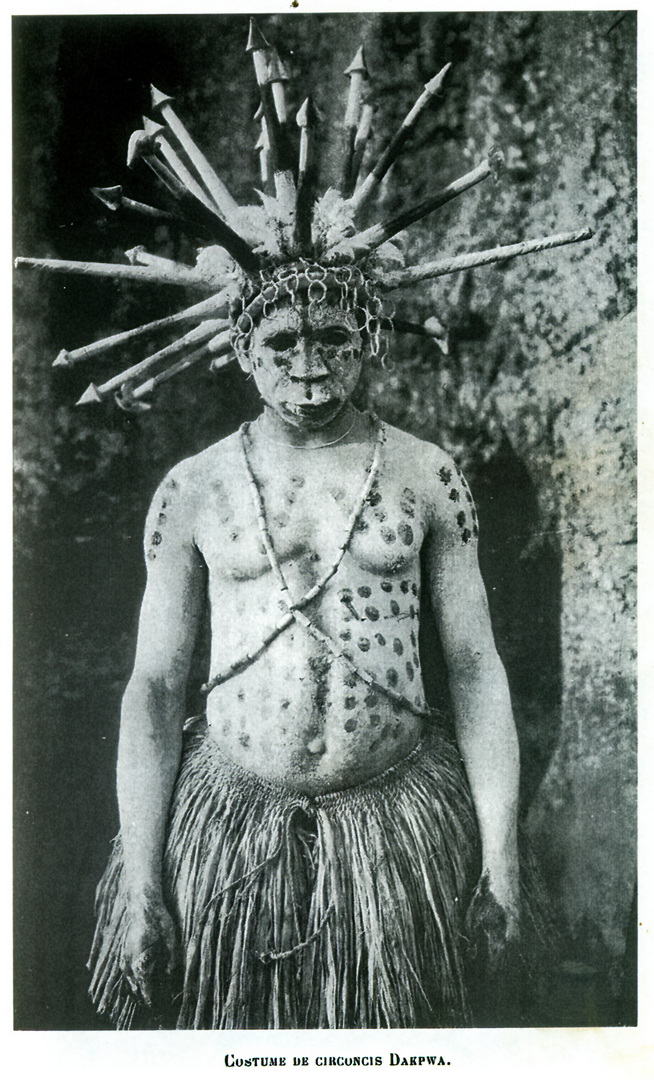
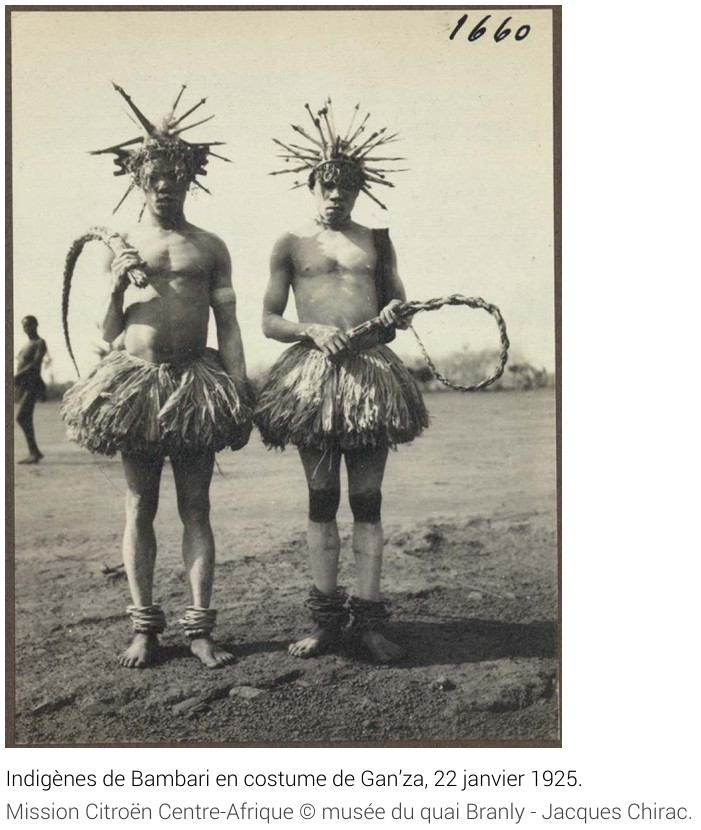
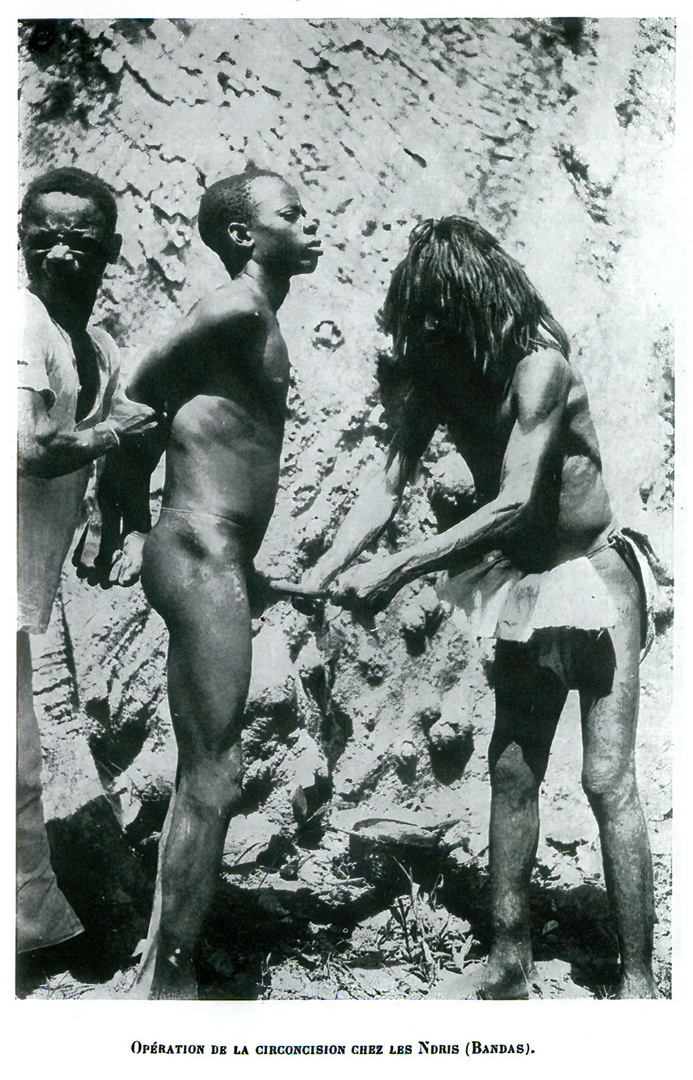
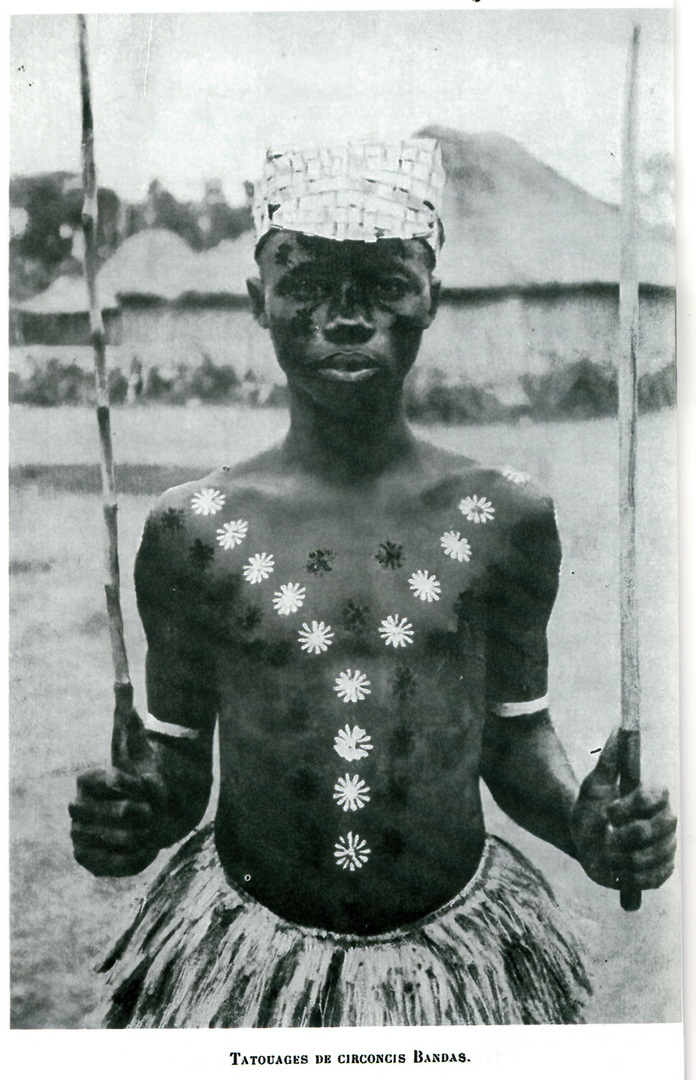
The ganza ceremony marked in pre-colonial times the end of a period of initiation and access to adulthood. The term ganza also applies to young girls subjected to excision. Today, with most Banda people having adopted Christianity and Western based customs and taboos, the Ganza ceremony has been used to incorporate foreign elements and initiate a process of assigning a new value to them. These new artifacts continue, in the absence of lost initiatory contexts, to be reconstructed, modified, and resignified. Their exhibition provokes ambivalent reactions among the population, where appreciation or nostalgia for the past can rub shoulders with panic regarding the danger posed by witchcraft objects.
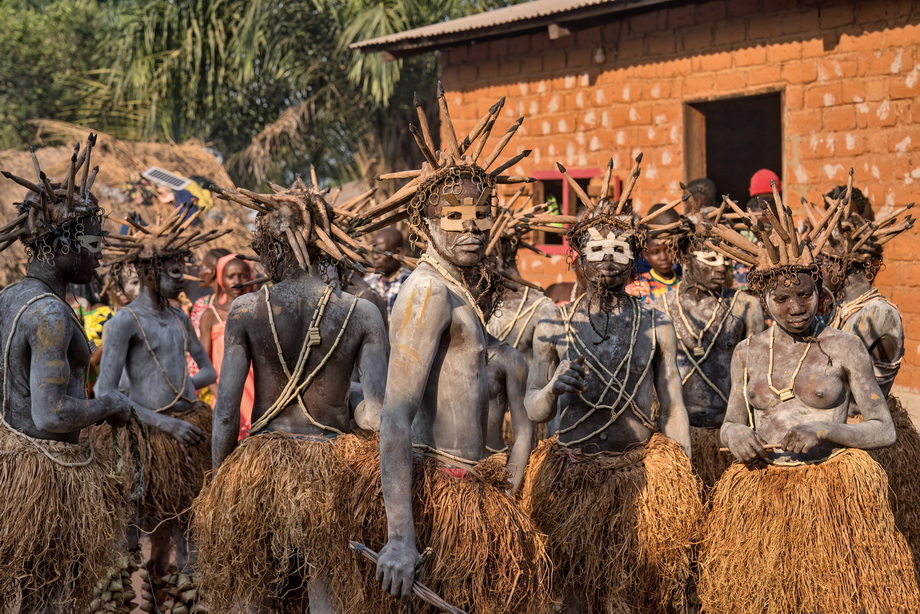
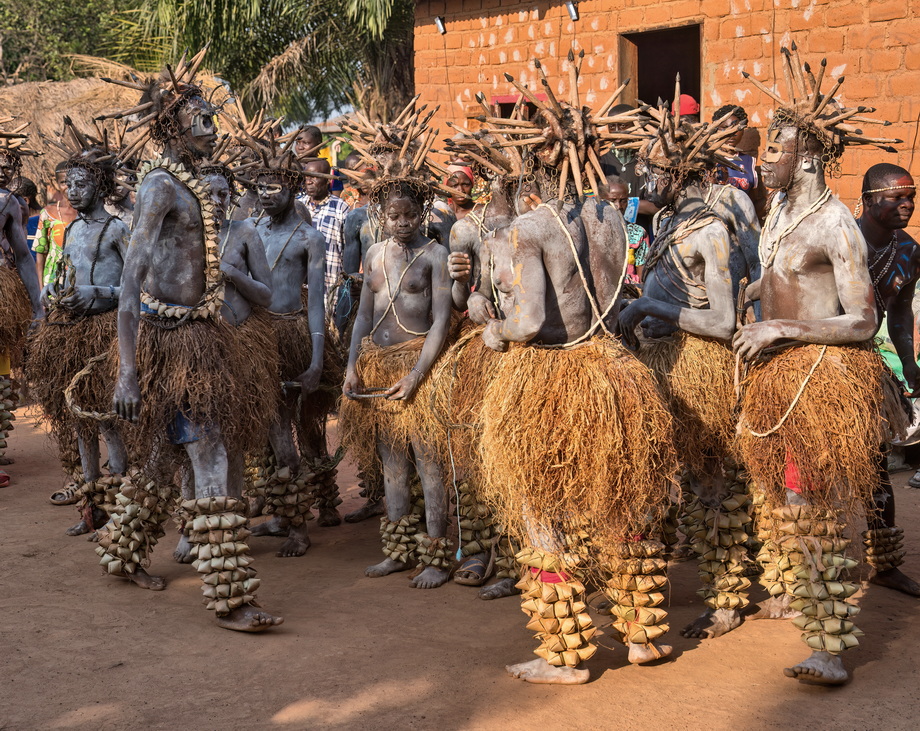
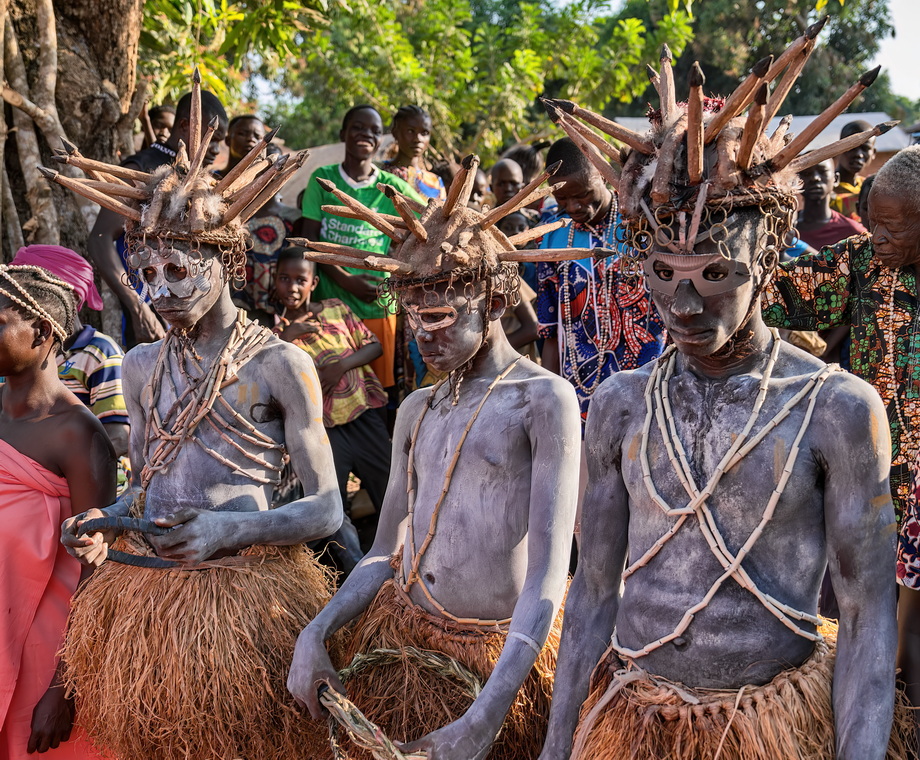
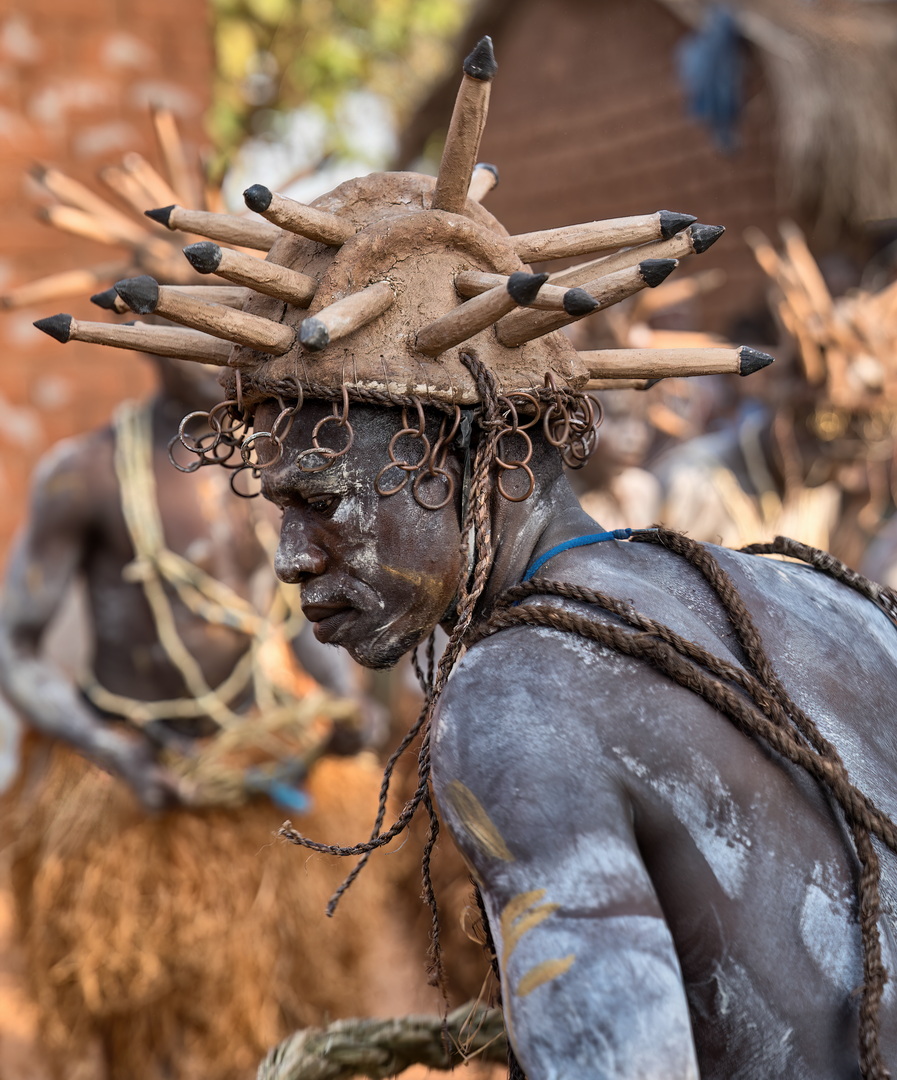
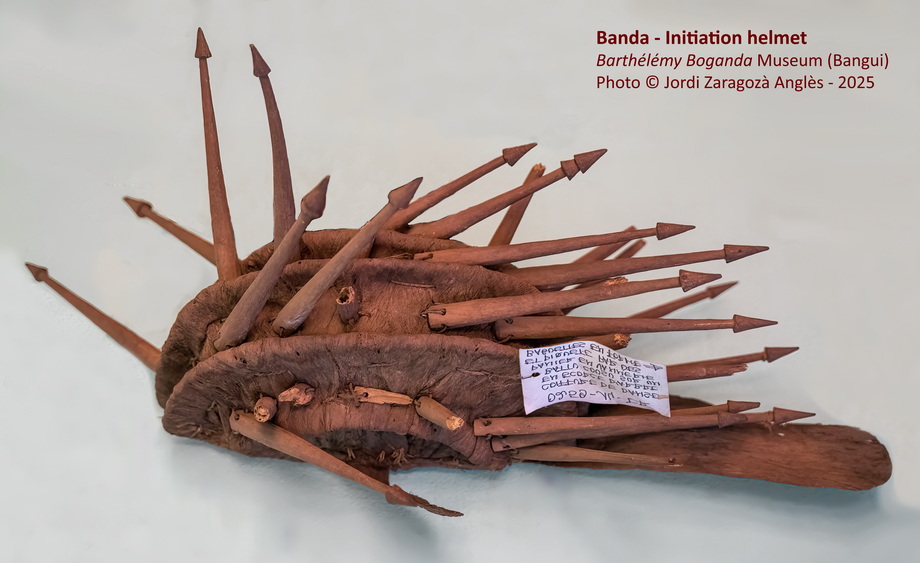
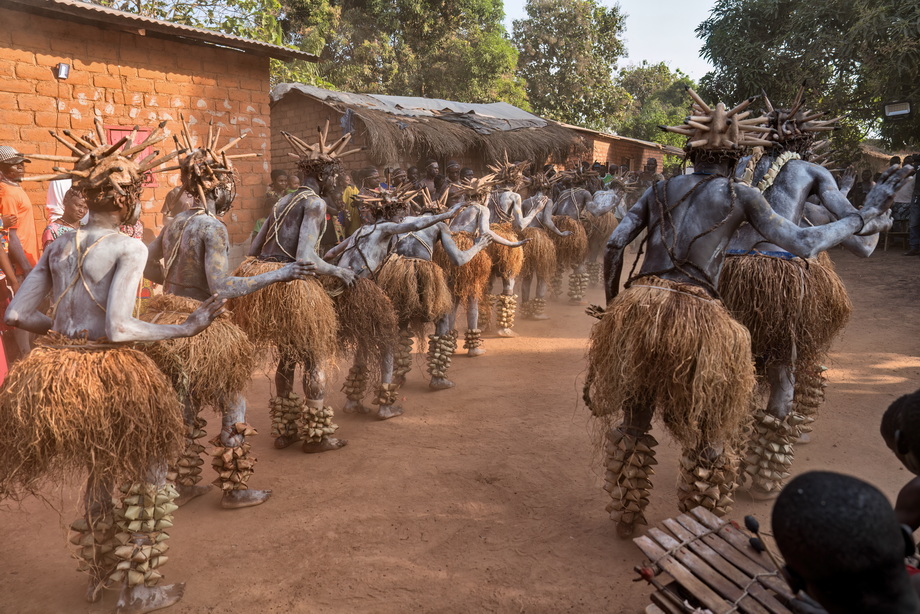
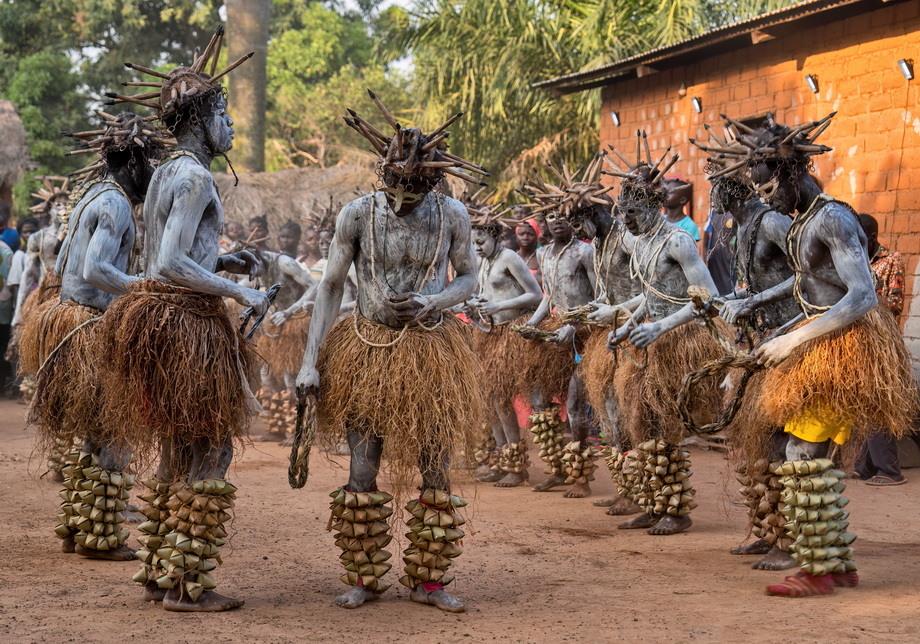
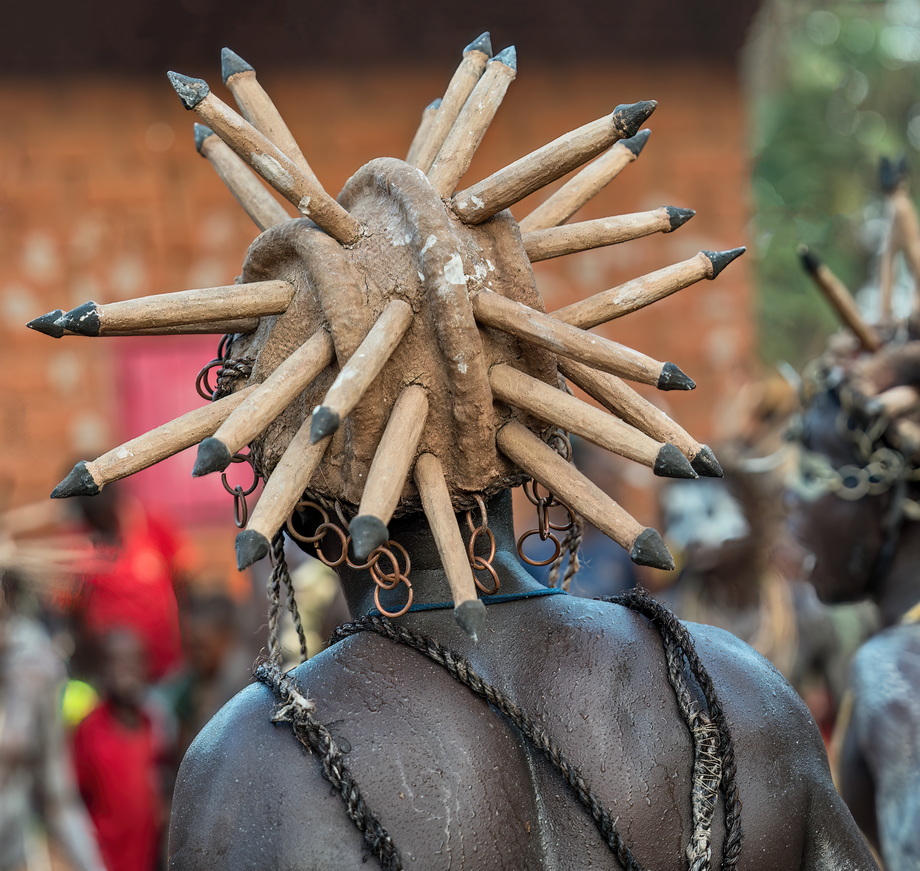
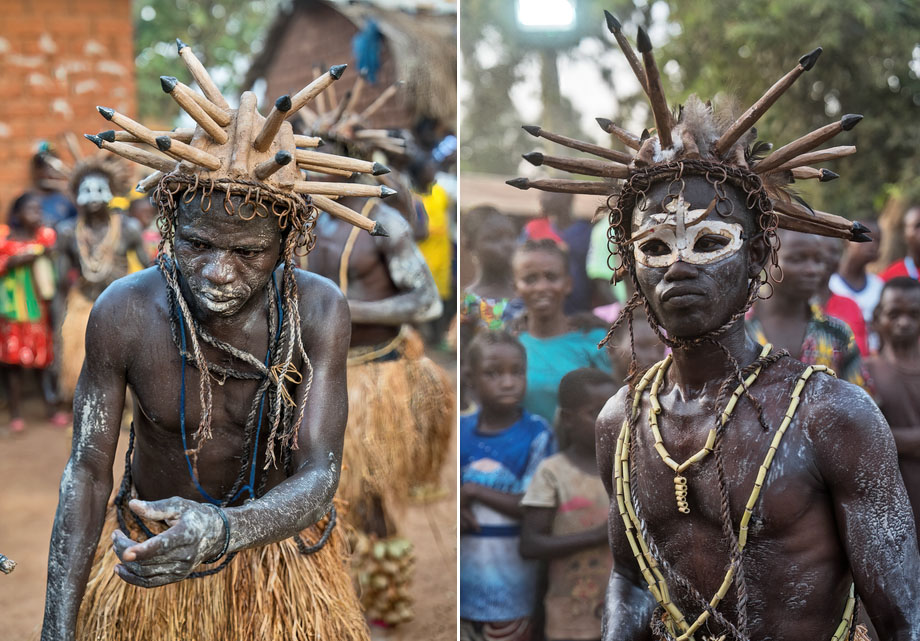
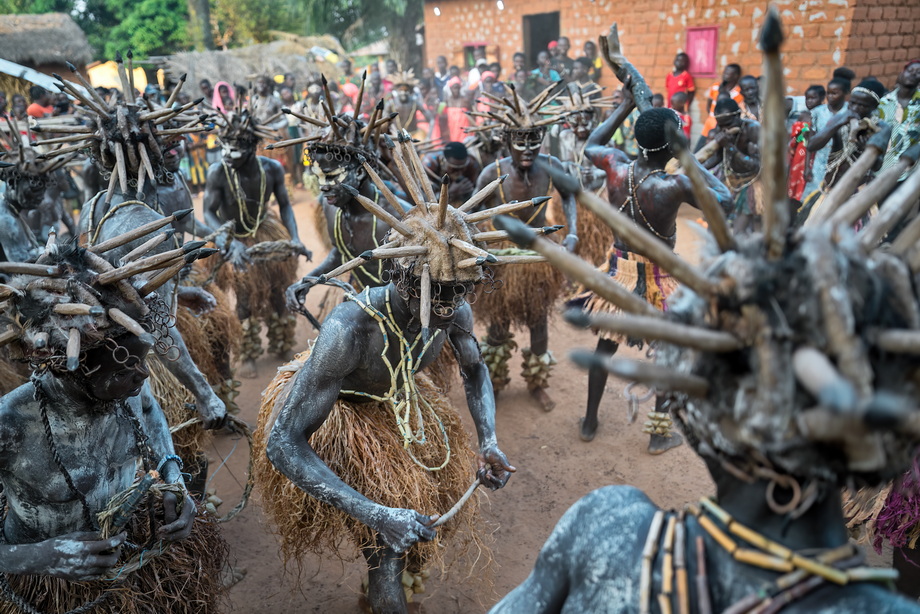
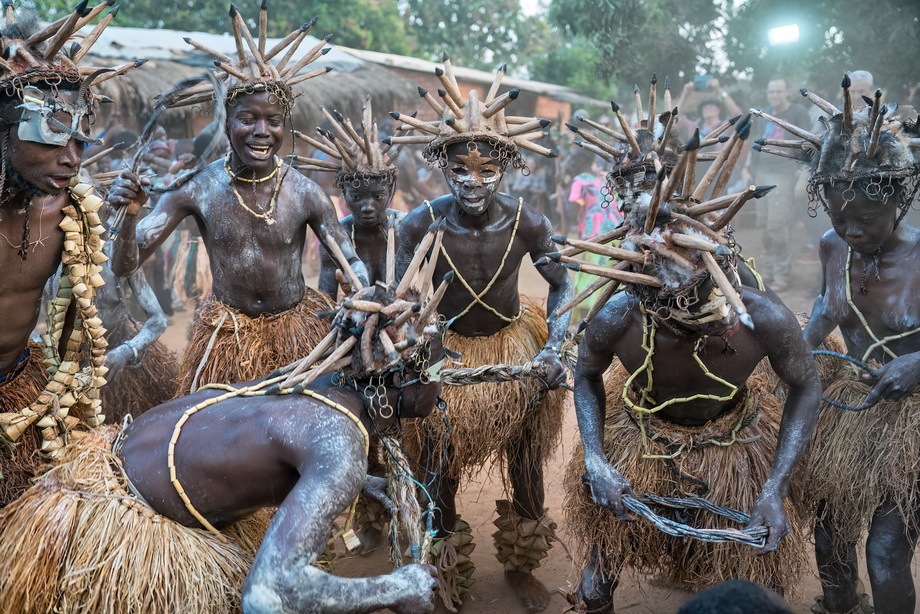
Nowadays, only a few rare objects are still displayed, or reproduced and used during festivities, institutional events or in other very specific situations, such as witchcraft trials: this is notably the case of a spiked headdress that young banda people used to wear during the ganza ceremony marking the end of a period of initiation and access to adulthood.
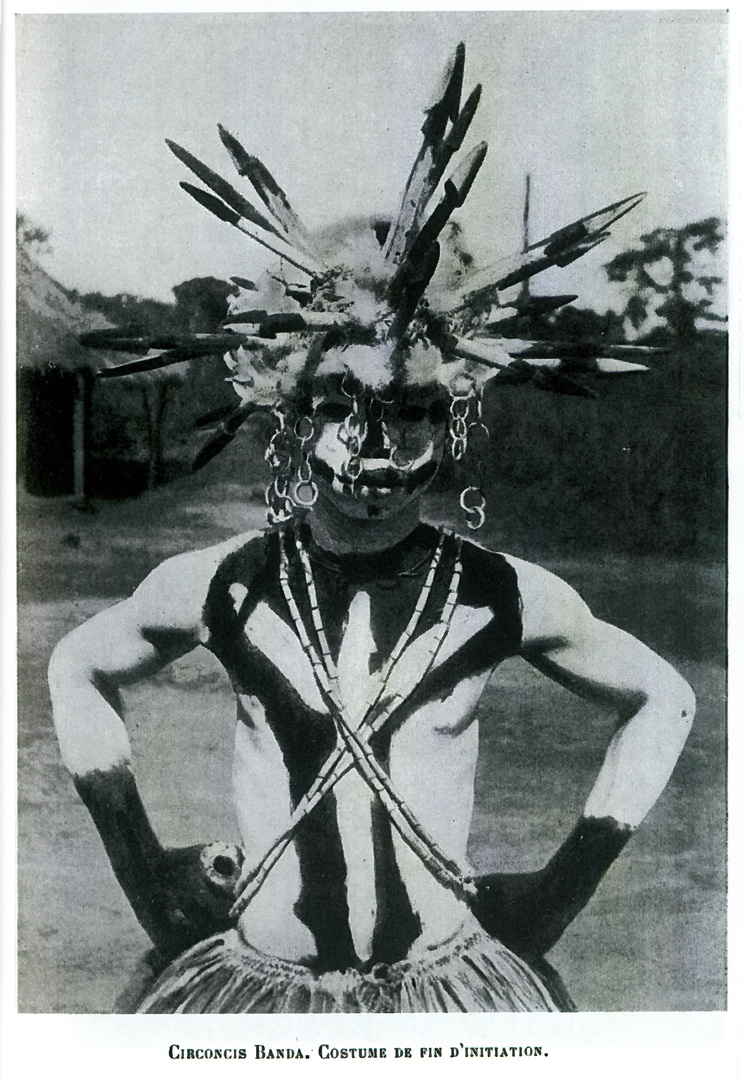
Among the Banda, the term ganza designates circumcision and, by extension, the young neophyte who formerly, to reach adulthood, was subjected to an articulated ritual, sometimes lasting a month or more under the control of the ende (circumcised elders).
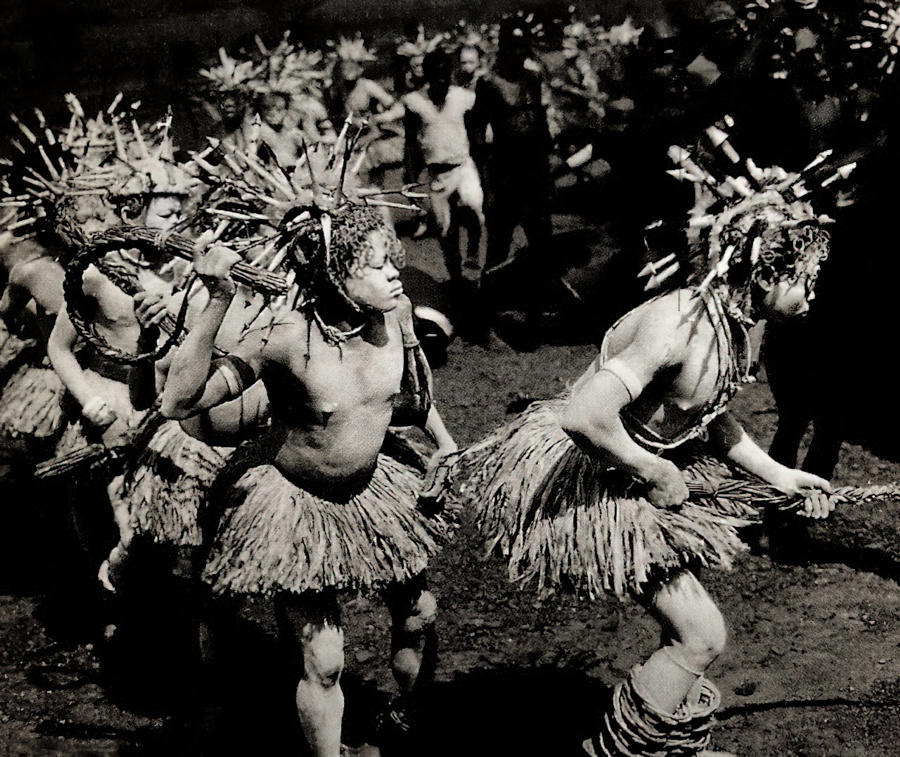
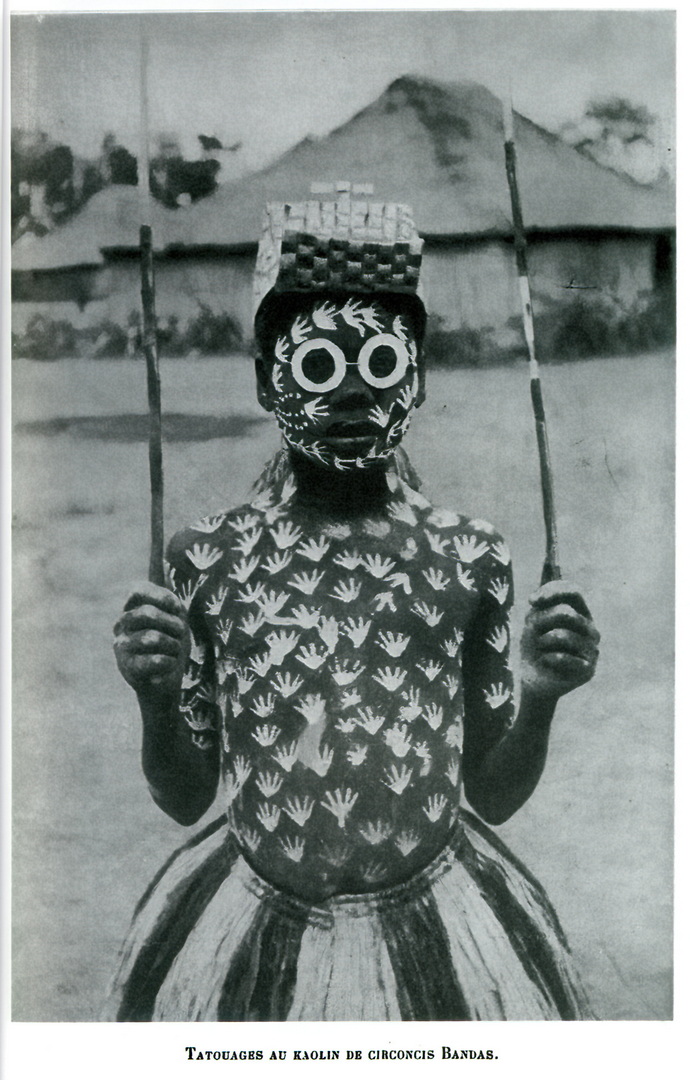
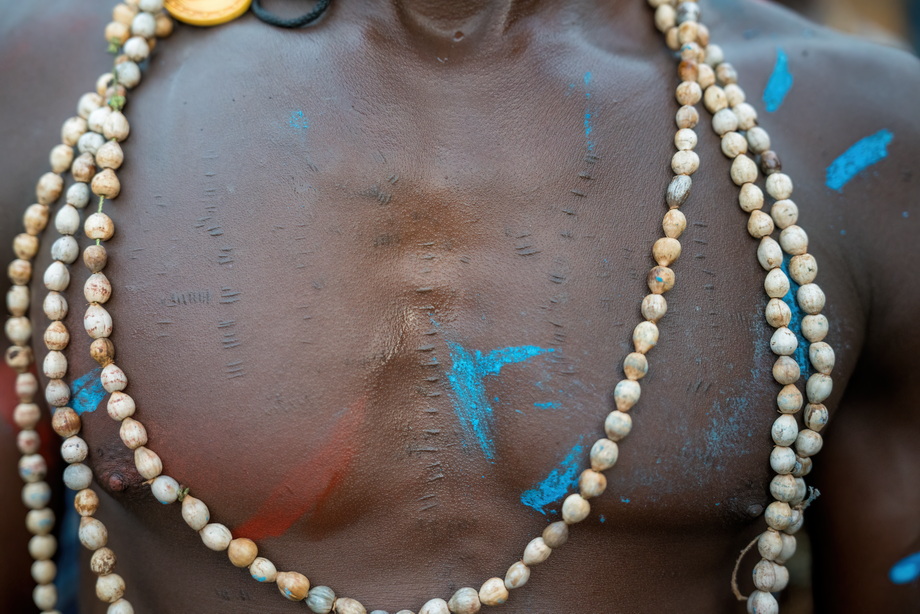
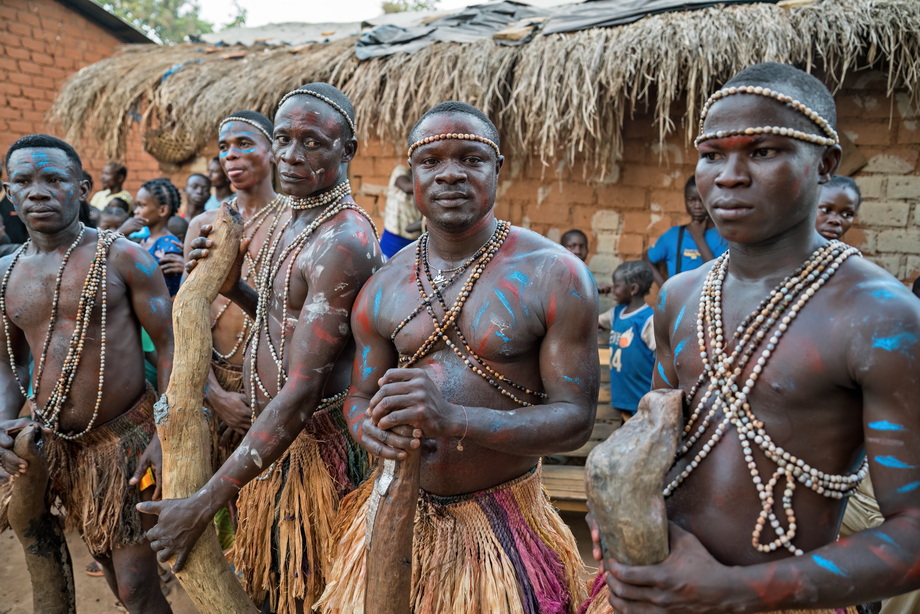
Among certain Banda groups, at the end of the period of seclusion, the young ganza, their bodies painted white, wearing kundu tassels of twisted thread and sporting poto ganza (or garaba) headdresses topped with colored wooden spikes, danced publicly to the sound of orchestras of wooden trumpets, holding in their hands whips or ceremonial magya knives.
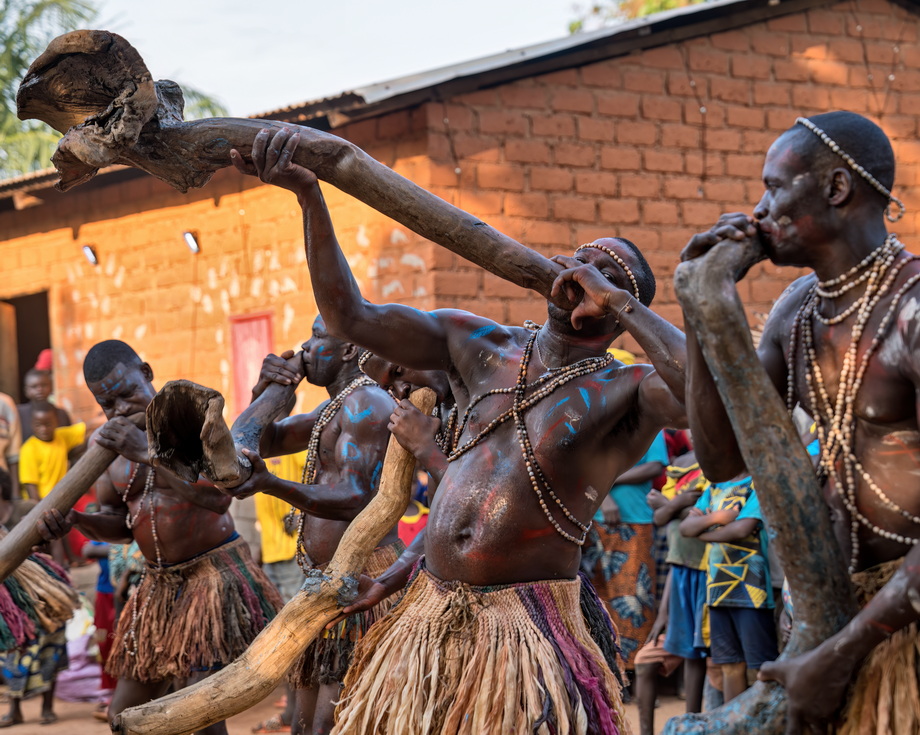
They dance in single file, gravely, to the sounds of twenty-three earth or wooden horns of unequal lengths (thirty centimeters to one and a half meters), each of which can only give one note […] in their midst an old woman beats time with a duster of black hair. At her feet a large black demon writhes in the dust, prey to feigned convulsions, without ceasing to blow his horn. The din is deafening, for, dominating the blaring of the horns, all, with the sole exception of the little white dancers, sing, howl at the top of their lungs, tirelessly, a strange tune (which I have also noted down).
The Banda sub-tribes neighbour the Azande to the south, Kresh and Feroge to the north and Bviri, Sere, Ndogo to the east. In the past the Banda had bad relations with the Feroge and the Azande.
The Broto are one of about 50 communities in the Banda ethnic group, which is widespread in central CAR.
The musicians - clad in clothes made of bark that are called kundou - mark the rhythm with a rolling step, shaking their alikposso, little bells made of palm leaves attached to their ankles.
Local people emerge from their homes, delighted to hear something that is not gunfire but rather the comforting resonance of a horn sculpted by nature itself.
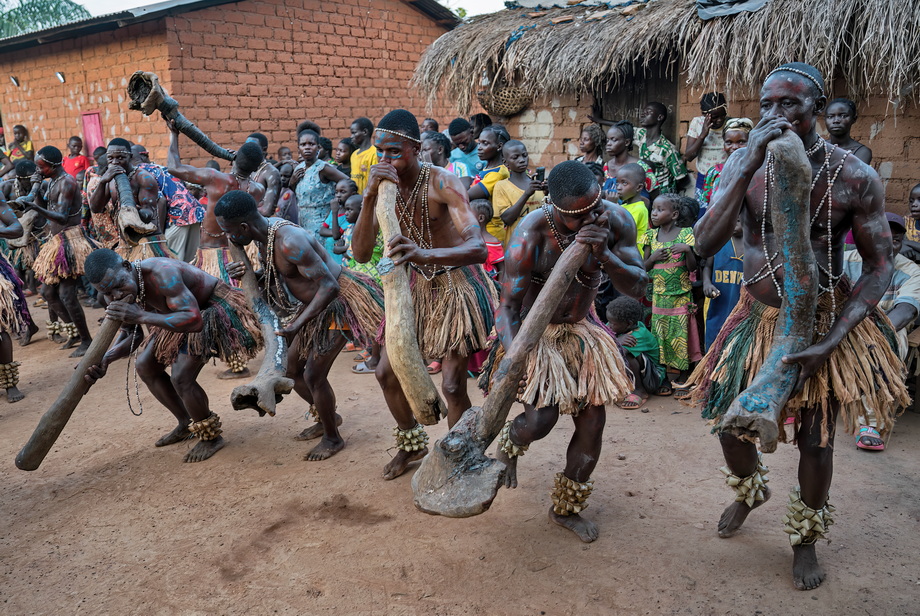
Carved from tree roots, with its origins lost in the mists of time, the horns of the Broto people, a part of the wide-ranging Banda ethnic group, play a ceremonial role. The instrument's earthy timbre is the sound of choice at traditional events and the Ongo-Broto used to perform. The trumpet shape is caused by termites.
Broto musicians play at ceremonies, weddings, parties, funerals...
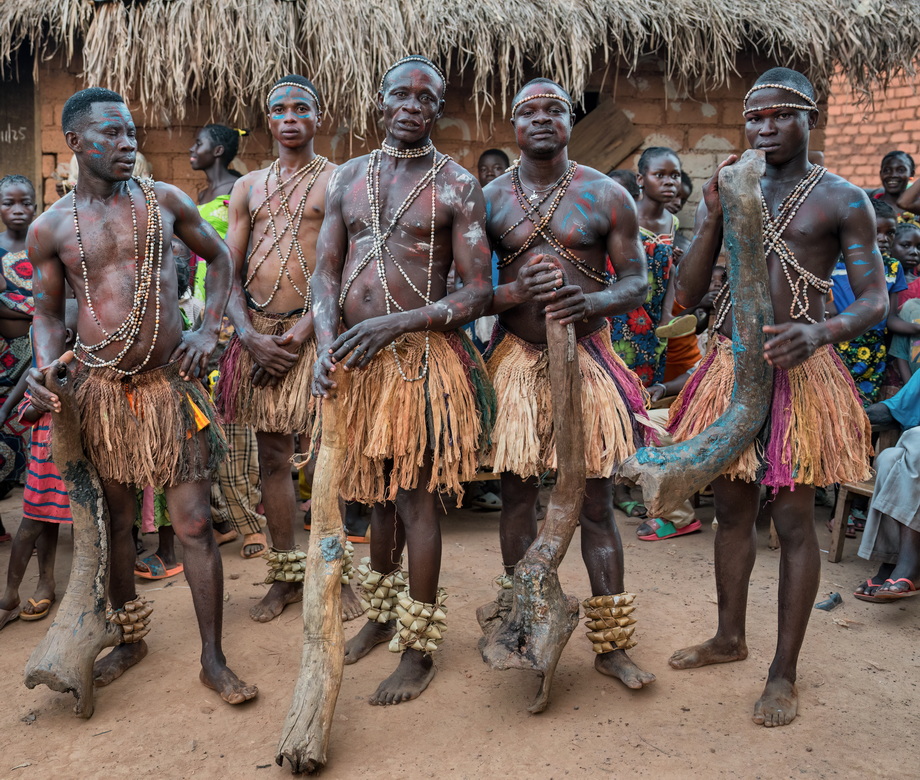
In the past, young men learned to play the Broto horn as part of their initiation into manhood, a tradition handed on from generation to generation. The role of the horn in the initiation ritual has faded away as younger children are taught the instrument and its strange overlapping sounds. The note and its overtones require extreme accuracy to deliver properly, for the pitch and feel of the sound depend crucially on the shape and width of the root.
Sources: