
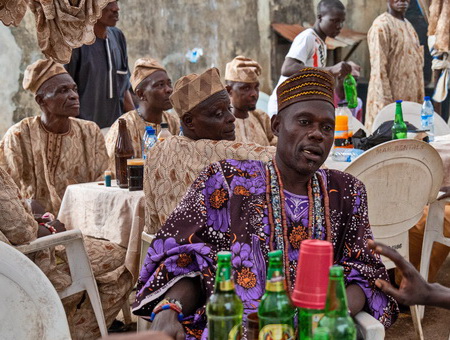
The Egba people are a subgroup of the Yoruba people, an ethnic group of western Nigeria, a majority of whom are from the central part of Ogun State that is Ogun Central Senatorial District.
Ogun Central Senatorial District comprises six local government areas in Ogun State: Abeokuta North, Abeokuta South, Ewekoro, Ifo, Obafemi Owode and Odeda local governments.
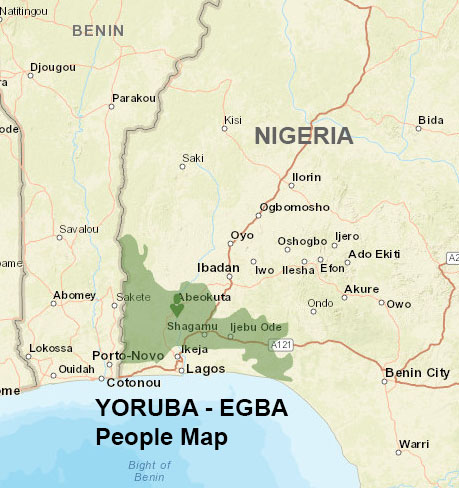
Before the creation of the Southern Nigeria Protectorate, Egba territory and people is bordered by the Ketu (Benin) in the West, the Lagos Colony in south, Ijebu in the east, and Oyo, Ibadan and Isoya near Ile Ife in the north. The people are directly connected to the Ogun River, but detached from the swampy coast of Lagos. Through the Egba land, there are direct routes to other Yoruba towns, including Lagos, Ibadan, Ijebu-Ode, Ketu (Benin), and Porto Novo (Àjàṣẹ́) in the Benin Republic.
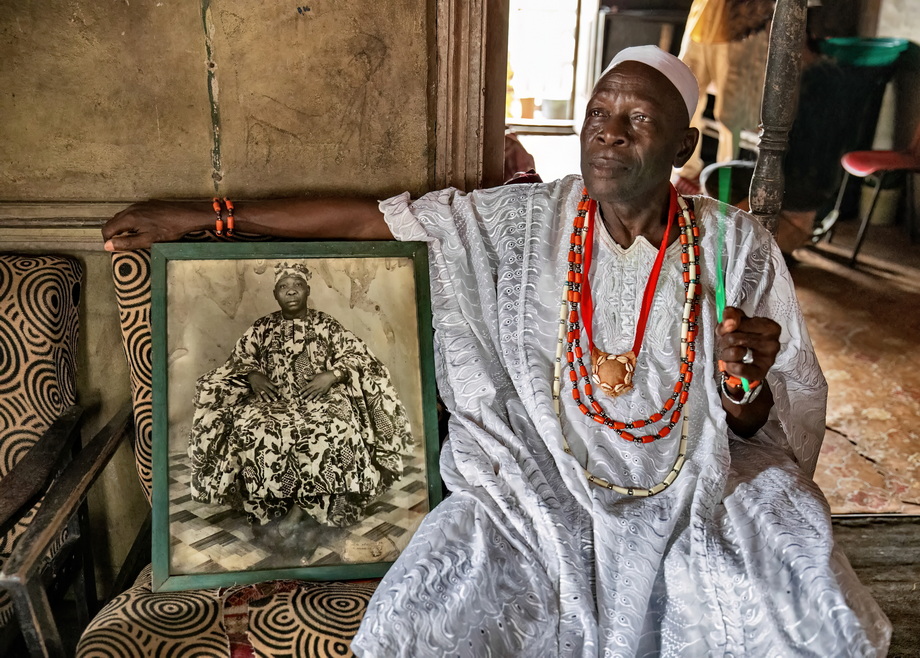
The origination of the word "Egba" is disputed. The first meaning may come from the word Ẹ̀gbálugbó, meaning wanderers towards the forest, and this comes from the fact that the ancestors of the Egba people came from the region of the Oyo Empire to the "Egba Forest" and formed what we now know as the city of Abeokuta. The "Egbalugbo" were in conjunction with the Ẹ̀gbáluwẹ or Ẹ̀gbálodó, meaning the wanderers towards the river, who later shortened their name to "Egbado," another subethnic group of the Yoruba. Another possible meaning may come from the word Ẹsẹ̀gbá, the title of a chief which led several groups of the Egba to their present location.
The Egbas can be distinguished from other Yoruba group with:
The Egba facial marks. The Egba facial mark is known as the Abaja Oro.
Abaja oro (vertcal abaja), is a set of three perpendicular lines that is set in an upright position and cut into the two cheeks. This was common among the Egba people and differen from de Pele only in lenght (Egba marks are longer).
The younger generations, however, have their lines rather faint or of shorter lengths indistinguishable from the Pele.
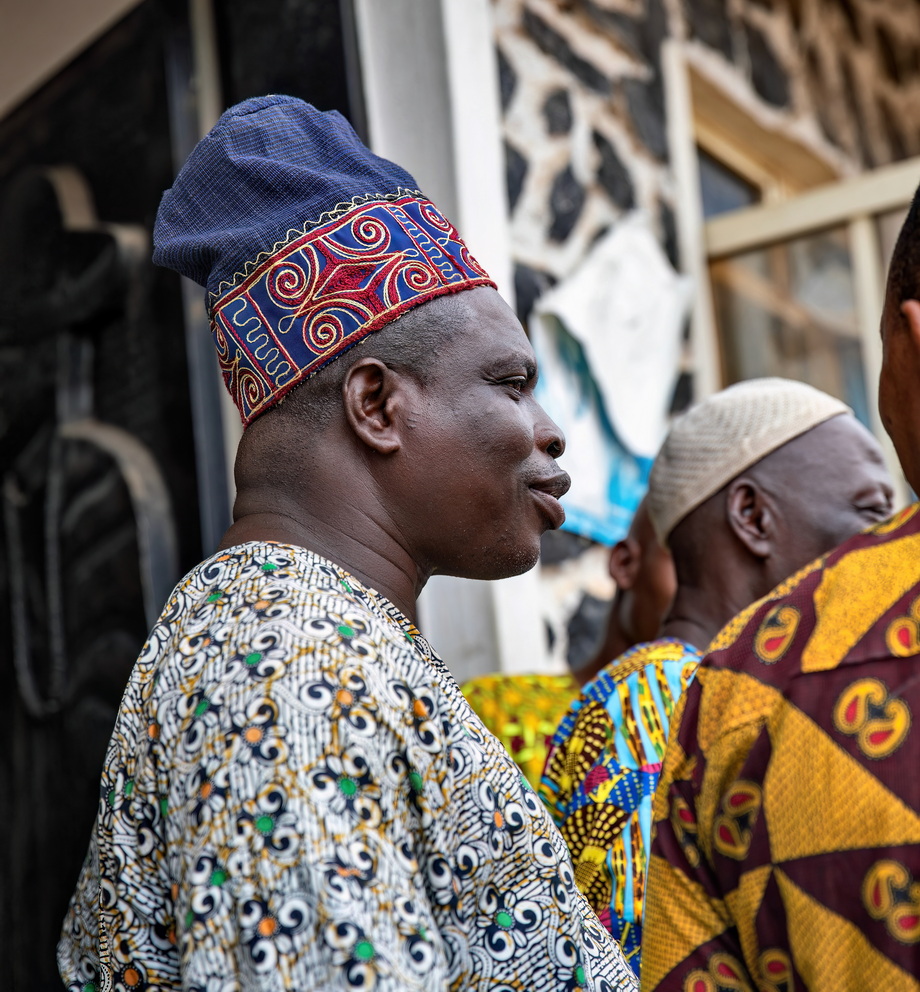
On clothing, Egba men wear trousers, kembe/sokoto for down; and the top is Buba and Agbada; cap, Fila (a beti aja).
Their women wear: Down, Wrapper, Iro; Top, Buba; Headgear, Gele; Others – Ipele – Piece of cloth placed on the shoulder or wrapped around the waist.
Their staple food Food is Lafu (White Amala) and Ewedu soup; Wara, (Cottage Cheese Drink)
The Egba people have their own National Anthem as a group of people.

Abeokuta lies in the fertile country of wooded savanna, the surface of which is broken by masses of grey granite. It is spread over an extensive area, being surrounded by mud walls 18 miles in extent.
Abeokuta is an agro-based market with small and middle level agro industries. The people produce agricultural products such as Yams, Cassava, Rice, Corn, Palm oil, Poultry, Cottons and vegetables.
Due to the rocky terrain of some parts of the city, it has for many years been home to a number of quarry industries. Although, cotton was introduced by the Missionaries in the 1850’s, Cotton weaving, pottery and tie and dye (Adire) are all traditional crafts of the Abeokuta people.
The city is reputed to be the capital of the tie and dye industry in Nigeria. The centre of Adire making and marketing in Abeokuta is at the popular Itoku market at Kenta.
Palm-oil, timber, rubber, yams, rice, cassava, maize, cotton, other fruits, and shea butter are the chief articles of trade. It is a key export location for cocoa, palm products, fruit, and kola nuts. Both rice and cotton were introduced by the missionaries in the 1850's and have become integral parts of the economy, along with the dye indigo. It lies below the Olumo Rock, home to several caves and shrines. The town depends on the Oyan River Dam for its water supply.
Abeokuta is the headquarters of the Federal Ogun-Oshin River Basin Authority, which is responsible for development of land and water resources for Lagos, Ogun, and Oyo states. Included in this are irrigation, food-processing, and electrification.
Local industries include but are not limited to fruit canning plants, plastics, breweries, sawmills, and an aluminum products factory. South of town are the Aro Granite Quarries.
Egba people speaks North-West Yoruba (NWY) dialect of the Yoruboid languages which belongs to the larger Niger-Congo language phylum. Apart from Egba people of Abeokuta, NYW dialect is also spoken in Ibadan, Ọyọ, Ogun and Lagos (Eko) areas.
North-West Yoruba is historically a part of the Ọyọ empire. In NWY dialects, Proto-Yoruba /gh/ (the velar fricative [ɣ]) and /gw/ have merged into /w/; the upper vowels /i ̣/ and /ụ/ were raised and merged with /i/ and /u/, just as their nasal counterparts, resulting in a vowel system with seven oral and three nasal vowels. Ethnographically, traditional government is based on a division of power between civil and war chiefs; lineage and descent are unilineal and agnatic.
The Egba nation functions as a federation traditionally divided into four main sections, each governed by its own traditional king (Oba):
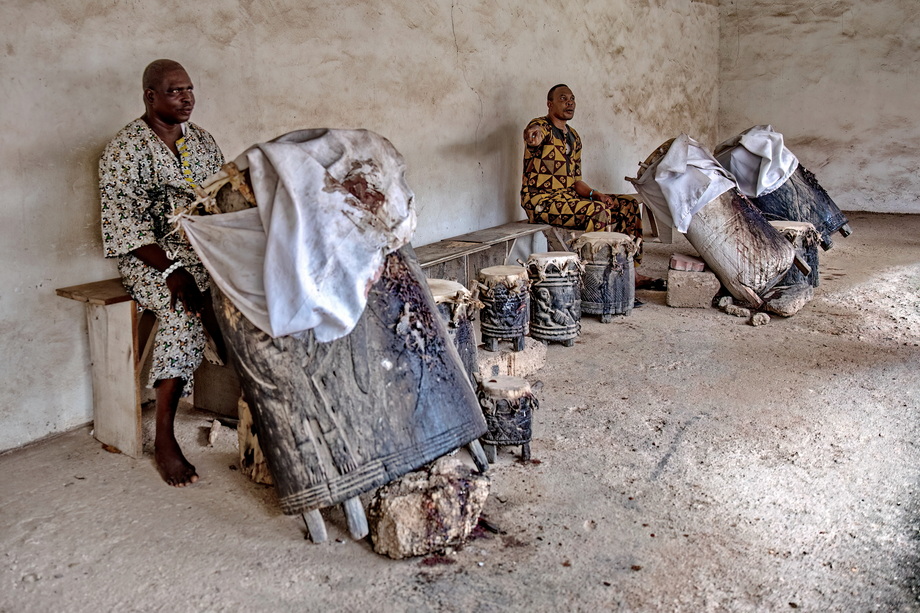
Egba people who are the original founders of the city of Abeokuta which they share with Owu people (later arrivals), had an opportunity of their land also settled on by missionaries (in the 1840s) by Sierra Leone Creole (Saro, who were Nigerians and others Africans descendants repatriated from diaspora back to Sierra Leone) who later became prominent as missionaries and as businessmen. It must be emphasized that Abeokuta’s success as the capital of the Egbas and as a link in theLagos - Abeokuta oil-palm trade led to war with Dahomey (now Benin Republic). In the battle at Abeokuta in 1851,the Egbas were aided by the missionaries and also armed by the British. Thus, they were able to defeat King Gezo’s Dahomey Army that was unique and famous in the history of West Africa for its common practice of using women warriors. Another Dahomey attack was repulsed in 1864. Troubles in the 1860s with the British in Lagos led the Egbas to close the trade routes to the coast and they expelled its missionaries and European traders at about 1867.
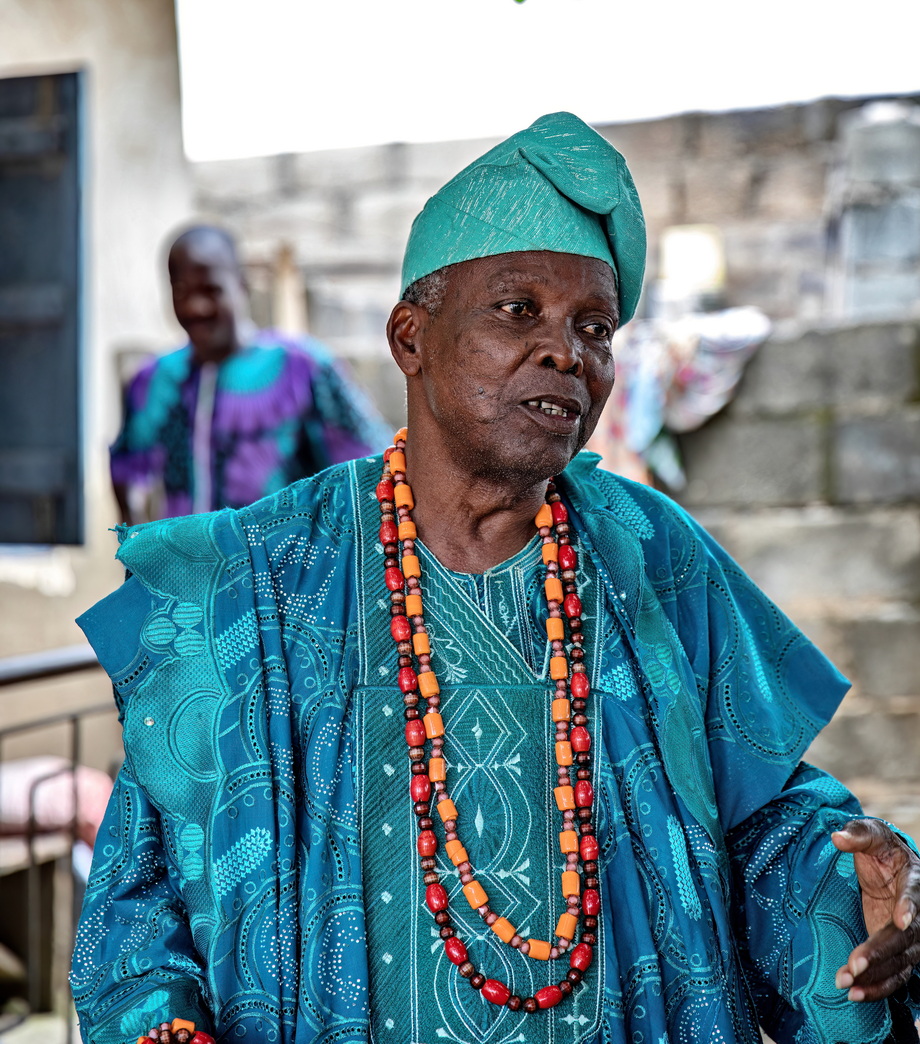
The Egba group, originally under the Oyo Empire, became independent following the spectacular collapse of Oyo in the first half of the 19th century. Wars with the Dahomey, in which the Egbas were successful partly due to the protection afforded by the Olumo Rock, led to the founding of the city of Abeokuta, which literally means "under the rock".
The Egba nation is made up of the following subdivisions: the Ake, Owu, Oke Ona and Gbagura, each with its own king. (Historically, the Egba nation is made up of these four divisions; Ibara, though geographically located in Abeokuta as well, is part of Yewaland.) During colonial rule the British recognised the Alake (or King of Ake) as the paramount ruler of the whole clan and their territory, and so, his successor is now referred to as the Alake of Egbaland. The titles of the kings of the aforementioned subdivisions are therefore Alake of Egbaland, Oshile of Oke Ona, Agura of Gbagura, and Olowu of Owu, in order of settlement and seniority in the Egba nation.
It is worthy of note that the original town and settlement of the Egba nation in Egbaland was under and around Olumo Rock, which is in the Ikija/Ikereku area of the Egba Oke Ona. The Jagunna of Itoko, an Oke Ona chief, is the high priest of Olumo. Olumo Rock is in the territory of and under the control of the Itokos.
Another reference name for Abeokuta by the founding fathers is Oko Adagba (Adagba's Farm) in reference to the hunter that discovered Olumo Rock. Adagba went hunting in search of game animals from the Obantoko township where his fellow Itoko citizens were stationed while wandering for a settlement. He then came across the mountain.
Egbaland was where Henry Townsend lived, and was also the home of the first newspaper in Nigeria (Iwe Irohin). Its people went on to serve as the first of the many Nigerian nations (until recently, the only one of them) to have an anthem.
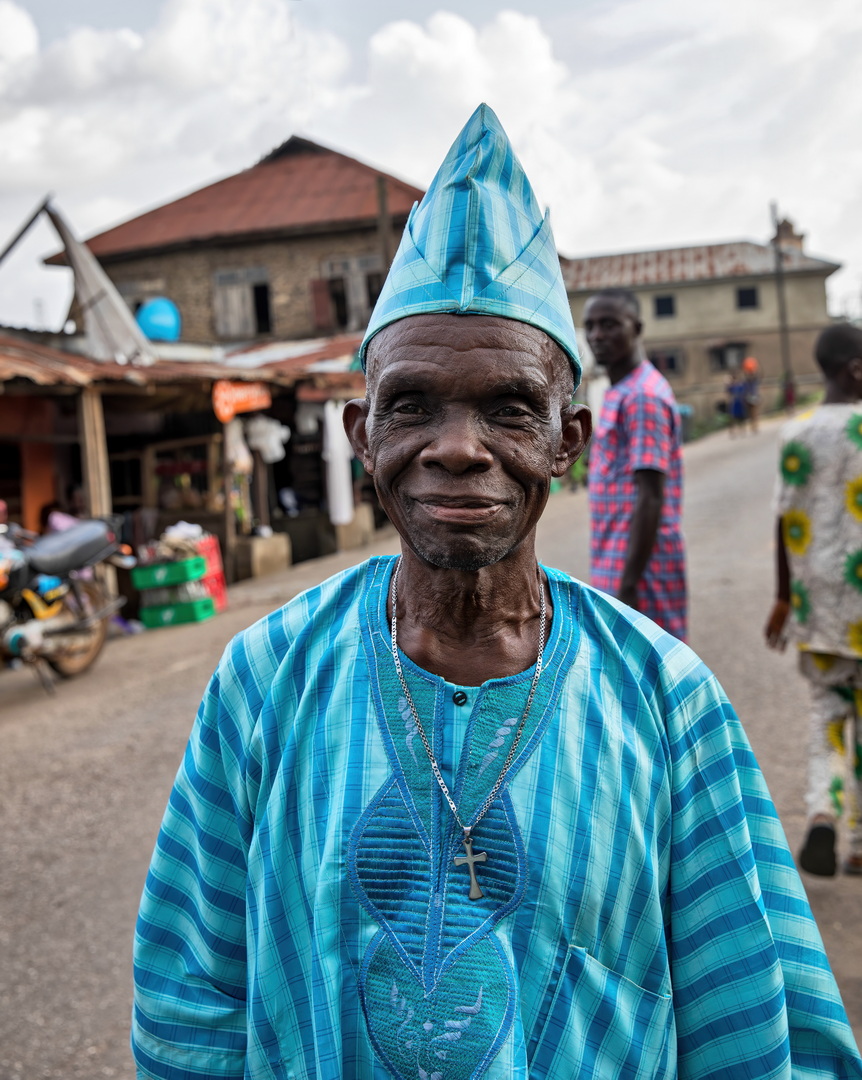
The convention which the Egba people operated since 1830 was never codified until 1897 when the EGBA UNITED GOVERNMENT became structured. Under the convention, the quarters were broadly grouped under four natural rulers namely:
The ALAKE of AKE, the OSILE of OKE-ONA, the AGURA of GBAGURA, and the OLOWU of OWU
The amalgamation of the Egba people in Abeokuta shared political powers in varying degrees under the following broad classifications:
The OGBONIs - the SENATE
Next to the natural rulers, the OGBONI chiefs constituted the Executive Council in the administration of the State. Their advice was highly valued by the natural rulers who invariably consulted them in confidence before taking any major decisions. The Ogbonis adjudicated over cases involving murder, adultery, divorce, recovery of debts, etc.
The OLOGUNs - the War Chiefs - who prosecuted wars
Were responsible for executing wars declared by the natural ruler or considered necessary at their own discretions. They were expected to be militarily prepared all the time, either to wage the Obas war or to ward off attacks from invaders. Sometimes, the War Chiefs wielded much power which could constitute a threat to the security of tenure of Oba himself.
The PARAKOYIs - the Commercial Chiefs who dominated the Economic sector.
The Commercial Chiefs superintended over matters of commerce and trade in general. They were responsible for the smooth running of the commercial life of the community and offered economic advice to the state.
The OLODEs - the Hunting Chiefs whose role was minor but nevertheless significant.
They looked after the affairs of farming and hunting in peace time.
During wars, they performed Para-military duties.
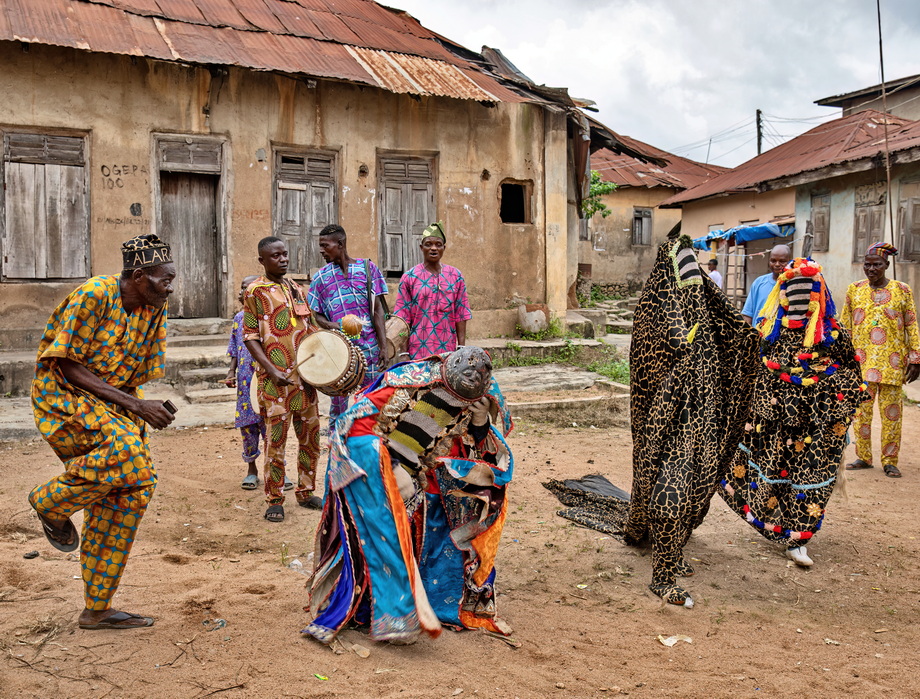
The Egba Egungun refers to the specific manifestation of the Egungun festival practiced by the Egba people in Abeokuta and surrounding areas of Ogun State, Nigeria.
Within Yoruba cosmology, Egungun is not merely a costume or a performance; it is a sacred society and ritual where masked figures (masquerades) physically embody the returned spirits of departed ancestors (Ara Ọrun—citizens of heaven). They return to earth to bless, cleanse, and offer spiritual guidance to their living descendants.
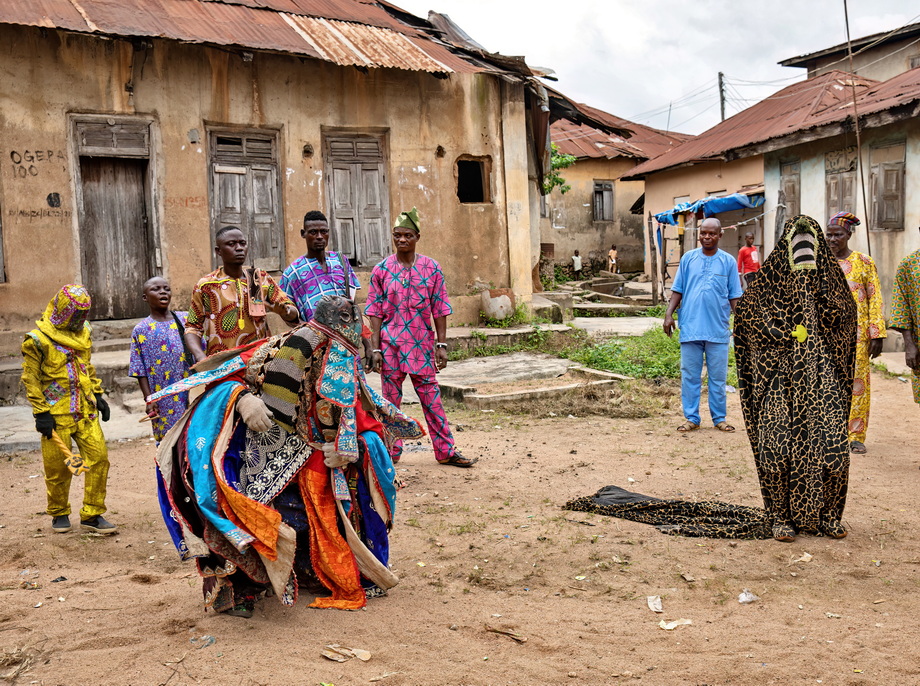
The annual Egungun festival across Egba territory (typically peaking around May) transforms neighborhoods like Ijaye, Itoku, and Oke-Ona into massive cultural arenas:
Historically, the Egungun society held significant political weight in Egbaland. Because they represented the ultimate unbiased authority—the ancestors—the Egungun acted as a supreme court. They were called upon to settle heavy land disputes, expose thieves, and execute capital punishment against individuals practicing malicious witchcraft or treason against the community.
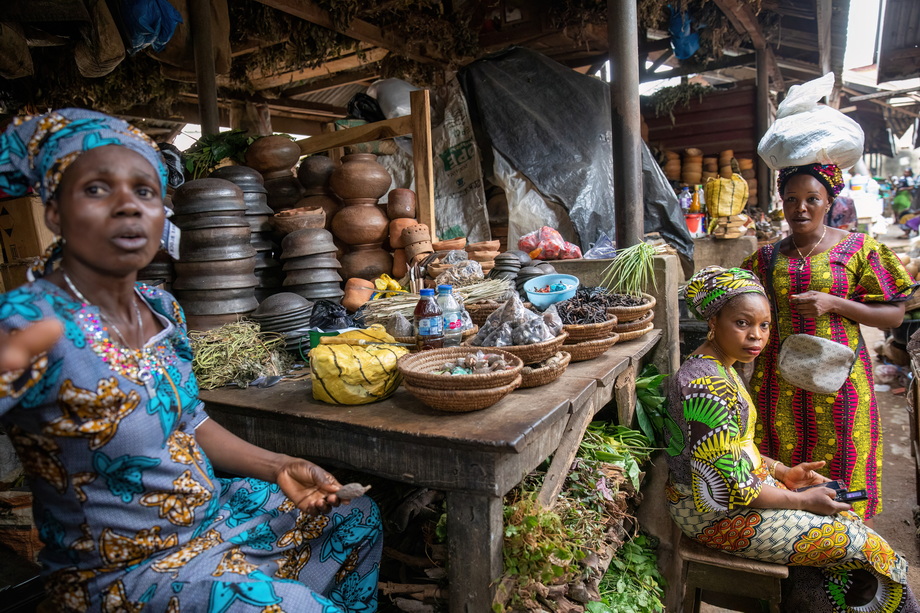
Egba masquerades are grouped into categories based on their spiritual function, age, and appearance rather than just visual aesthetics. The primary types include:
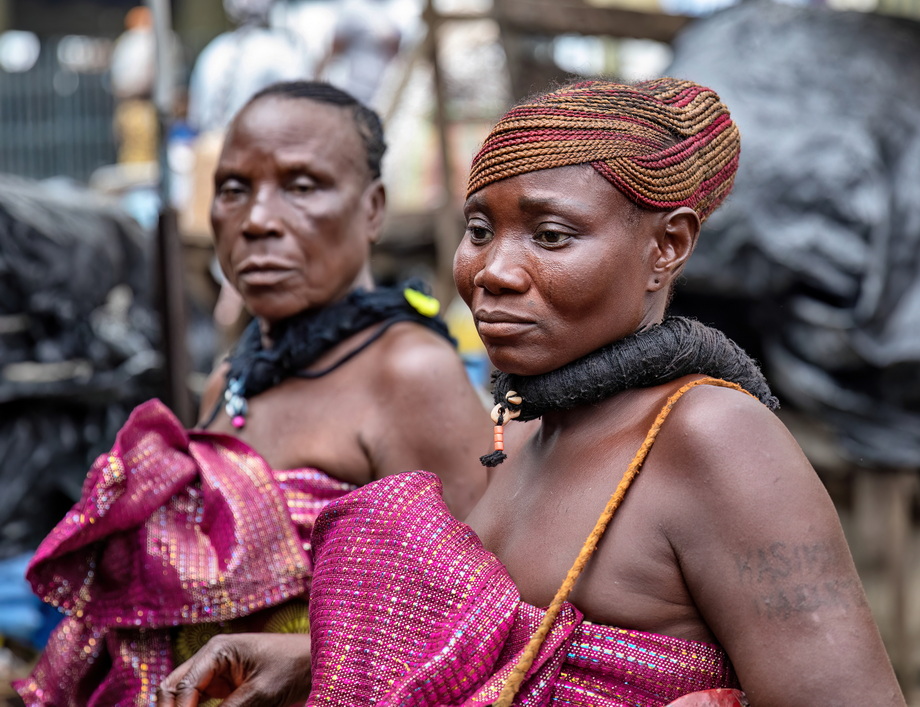
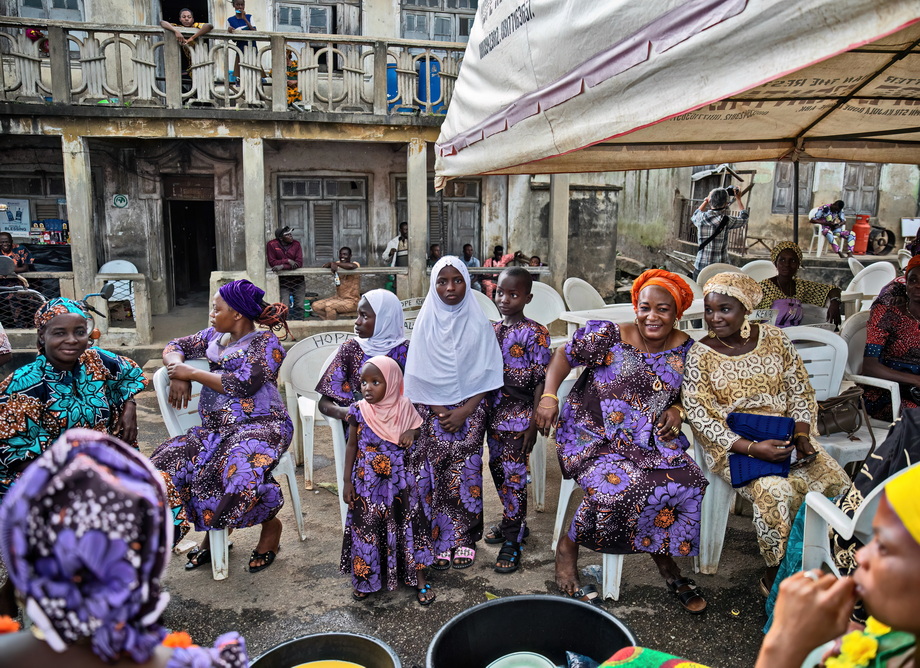
The relationship between the Egungun society and the Alake of Egbaland (the paramount king) is a delicate, centuries-old alliance of political and spiritual co-governance.

1. Royal Sanction and the Annual Homage
The Egungun festival cannot officially begin in Abeokuta until the leadership of the Egungun cult—headed by the Alapinni (the supreme high priest) and the regional Alagba (quarter priests)—receives the formal blessing and approval of the Alake. On the peak days of the festival, the highest-ranking ancestral masquerades march in a grand procession directly to the Aafin (Palace) of the Alake. They pay formal homage to the king, uttering prayers for his long reign, the prosperity of Egbaland, and protection from disasters.
2. Institutional Checks and Balances
In pre-colonial times, the Alake held supreme executive power, but the Egungun society held the ultimate veto power of the ancestors. Because a high-ranking Agba Egungun speaks with the literal voice of the dead, its decrees could not be easily overridden by a living king. If a king became tyrannical, the Egungun society could bring out specific fearsome masquerades to publicly condemn the palace's actions, forcing the ruler to realign with traditional laws.
3. Execution of Judicial Sentences
Historically, the Alake's council handled civil court cases, but criminal and spiritual offenses (like treason or severe witchcraft) required supernatural backing. Once the Alake and his chiefs passed judgment on a capital offender, the task of execution or banishment was often handed over to the Egungun society. This separated the bloody duty from the physical hands of the living king, framing the punishment as an absolute verdict from the ancestors themselves.
Sources: